Case study
The Ryzosphere
Brand, website and a knowledge-graph platform for intelligent matchmaking across the regenerative food and agriculture system.
Overview
The Ryzosphere is intelligent matchmaking for the food and ag system. It uses AI to connect producers, processors and buyers, advancing regenerative and bioregional markets while sustaining agricultural livelihoods.
The name comes from the rhizosphere, the living zone of soil around a plant’s roots where everything is connected. The idea guided the whole project: like the soil, a thriving regenerative supply chain is a network, and value comes from the connections inside it.
We designed the brand colour system, the marketing website and the Ryzosphere Network, a knowledge-graph platform where members can explore the network, ask questions in plain language and assess potential partners.
Challenge
Regenerative food systems depend on relationships, but the right partners are often hard to find and harder to trust.
Growers, processors, buyers and service providers each see only part of the network. Finding who distributes a crop, which partners share the same values, or whether a vendor can be trusted usually depends on personal contacts and a lot of time.
The platform had to make a complex web of organisations, products, certificates and locations understandable at a glance, and useful for people who work in fields and kitchens, not data teams. The brand had to feel rooted in agriculture while signalling that the technology behind it is advanced.
Brand
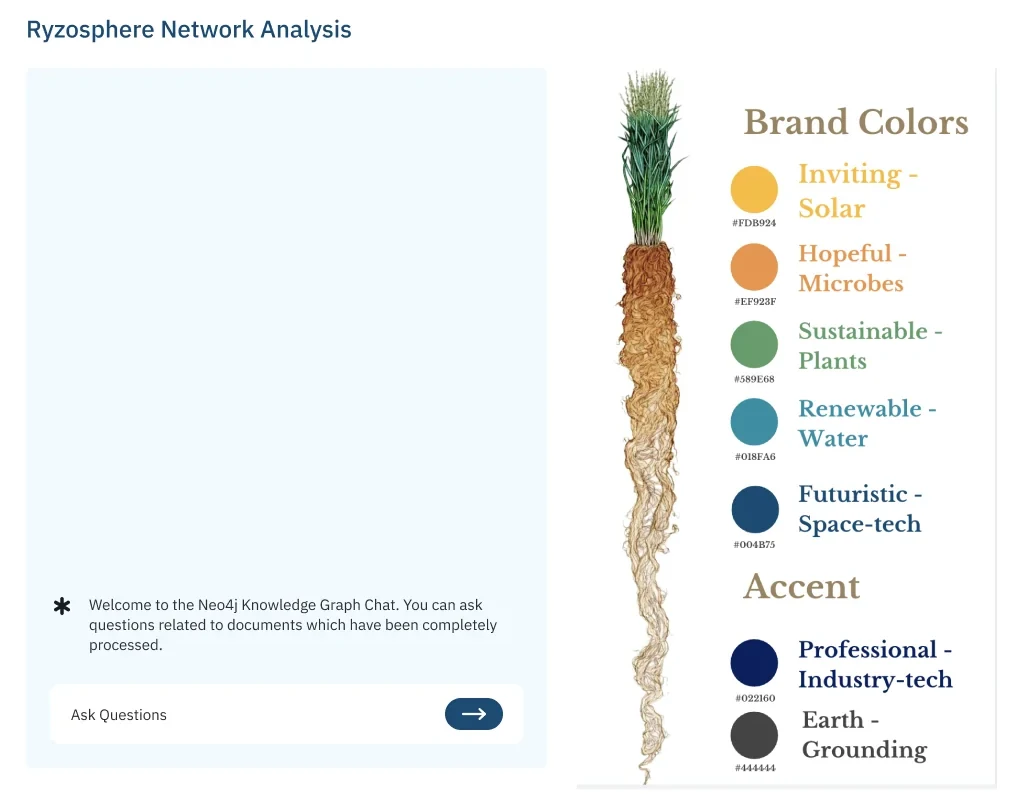
We built the colour system from the life of the soil: every colour has a name and a meaning, not just a hex value.
Five brand colours carry the story: Inviting Solar, Hopeful Microbes, Sustainable Plants, Renewable Water and Futuristic Space-tech. Two accents, Professional Industry-tech and Earth Grounding, give the system structure and seriousness.
The colours do real work in the product. In the network graph, each category of node takes one of the brand colours, so the palette becomes a legend people learn once and read everywhere.
Product
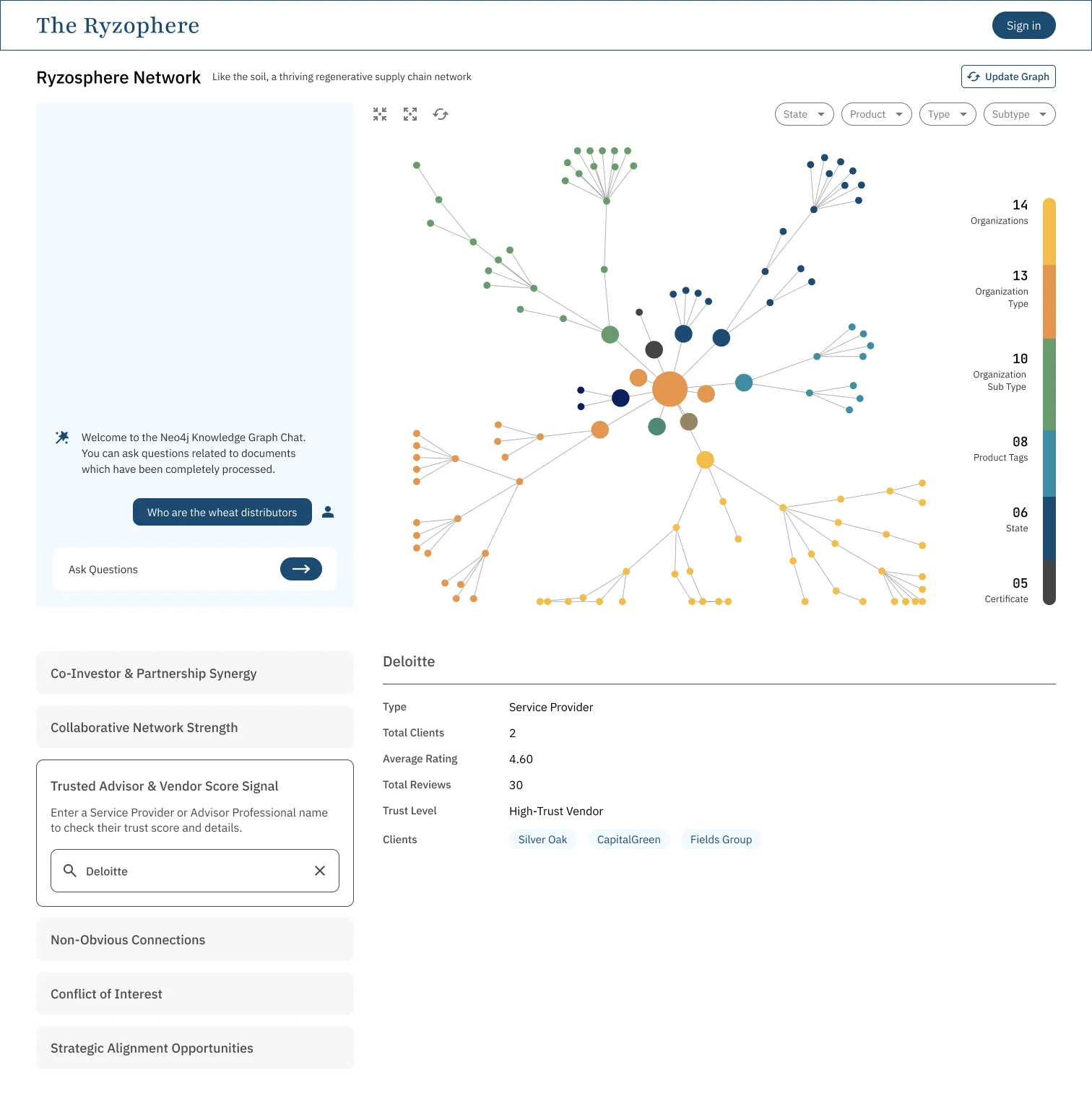
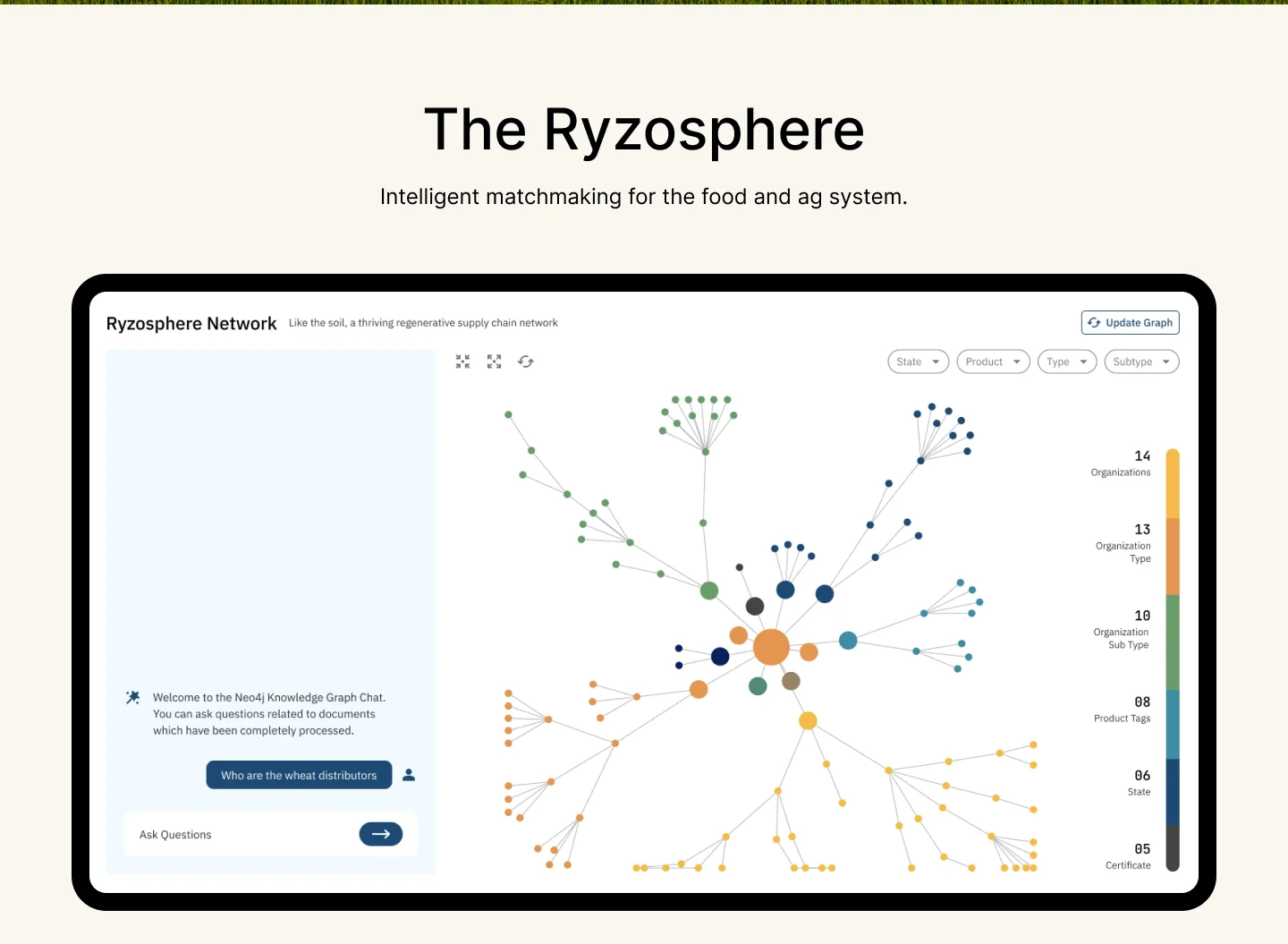
The Ryzosphere Network turns a knowledge graph into something people can explore, question and act on.
At the centre is an interactive graph of the network. Nodes are coloured by category, such as organisations, organisation types, product tags, states and certificates, with a legend that shows how many of each are in view. Filters for state, product, type and subtype narrow the graph, and controls let people expand, collapse and refresh it.
Beside the graph sits a chat panel. Members ask questions in plain language, such as who the wheat distributors are, and the answers draw on the documents and data already in the network.
Below, a set of signals helps people judge relationships: a Trusted Advisor & Vendor Score to check a service provider’s trust level, ratings and clients, plus views for co-investor and partnership synergy, collaborative network strength, non-obvious connections, conflicts of interest and strategic alignment.
Website
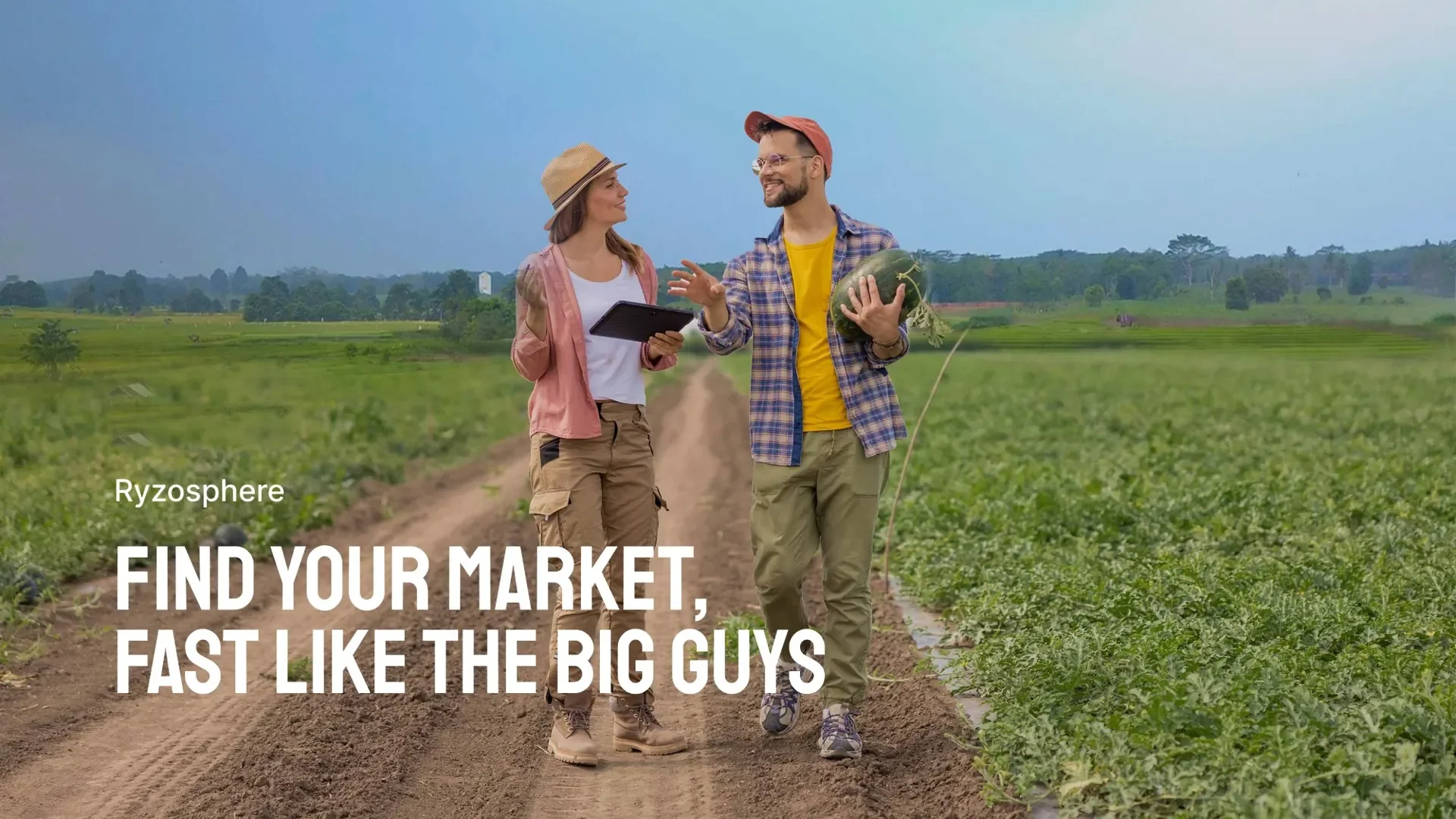
The website introduces The Ryzosphere with open fields, real crops and a clear promise: connecting networks, unlocking markets.
We explored several directions for the landing page before settling on the final one. It opens with “Connecting Networks. Unlocking Markets.” and a short explanation of how AI-powered matchmaking helps producers, processors and buyers. The product appears early, shown on a device, so visitors immediately see the network they would be joining.
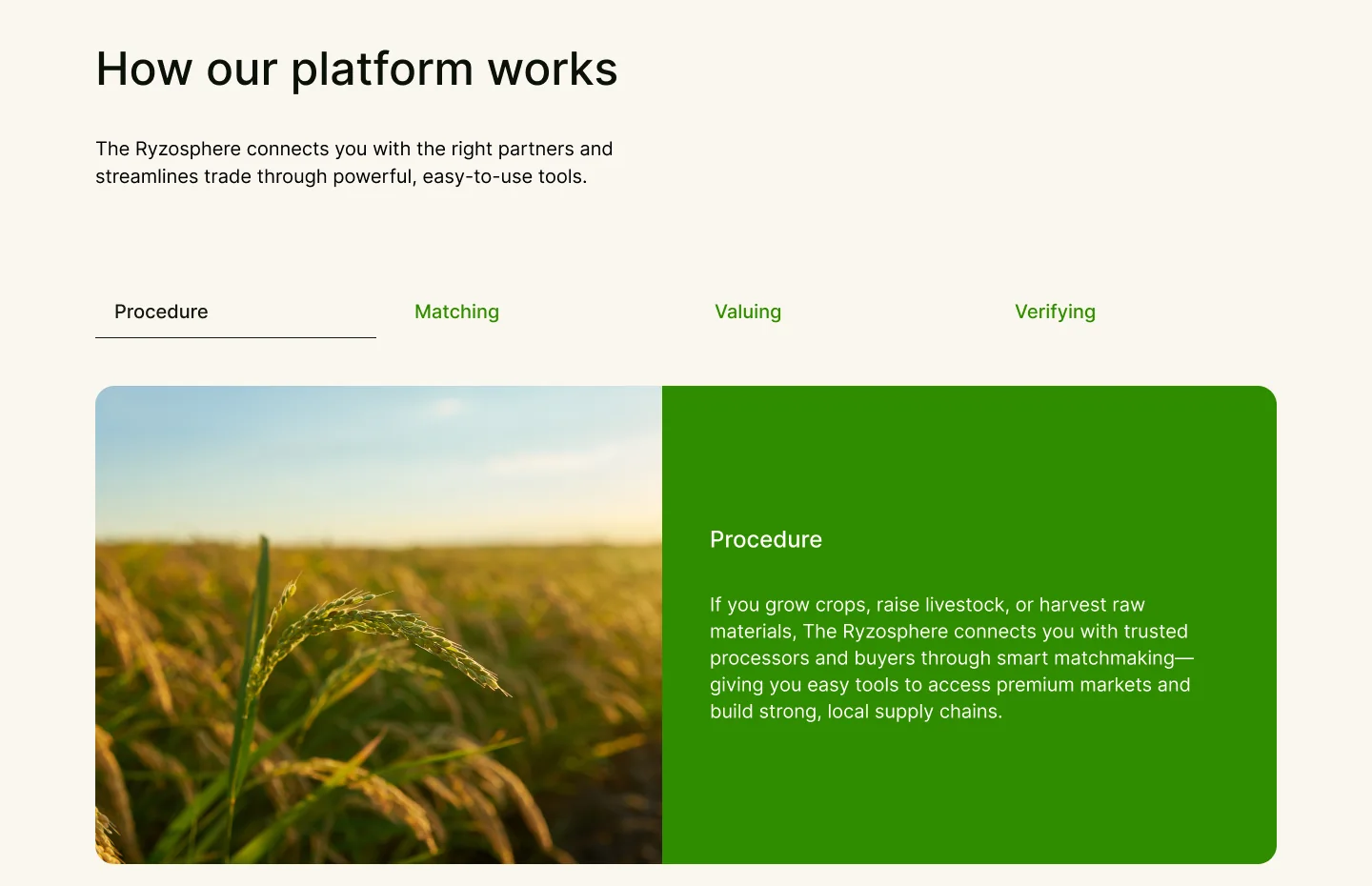
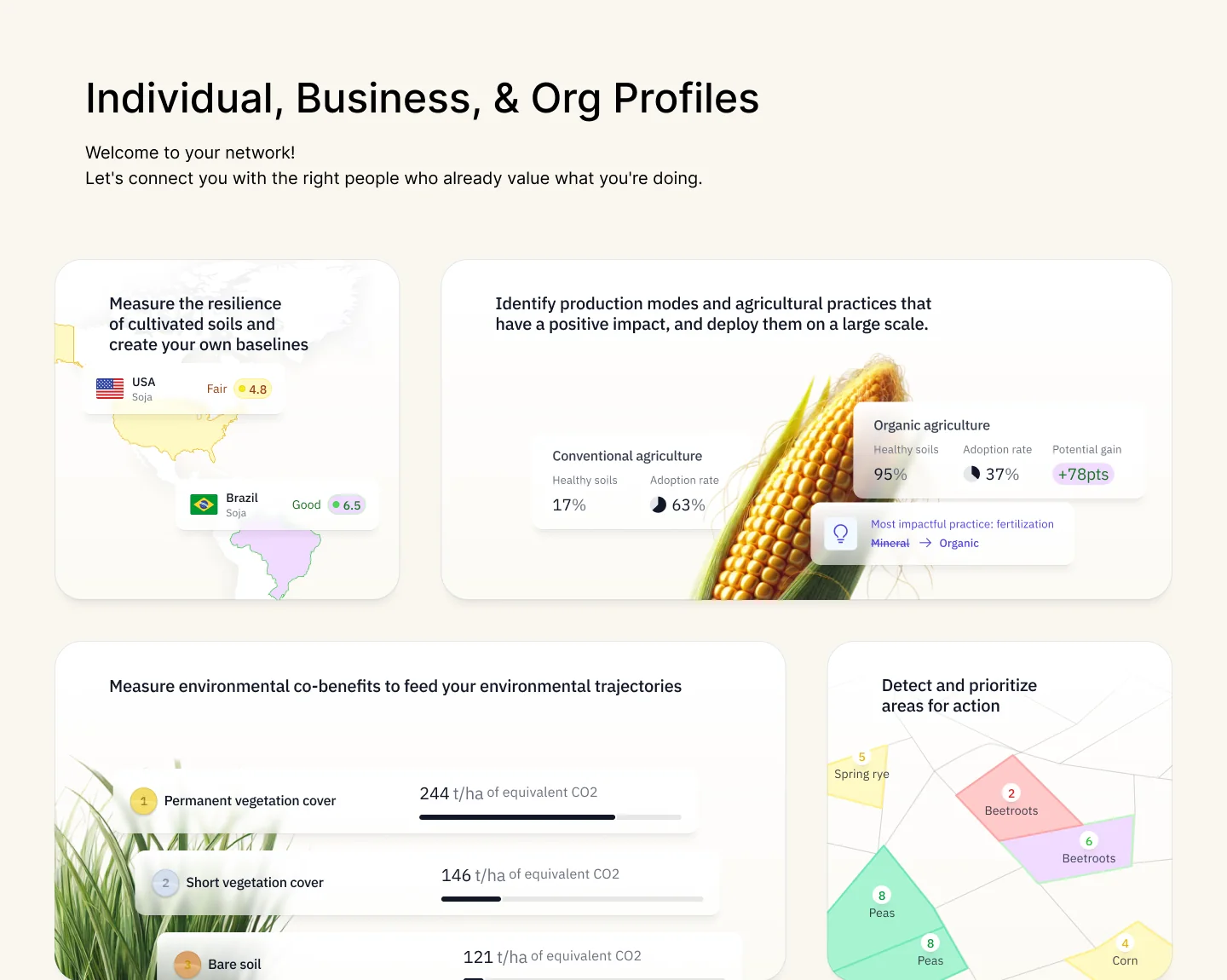
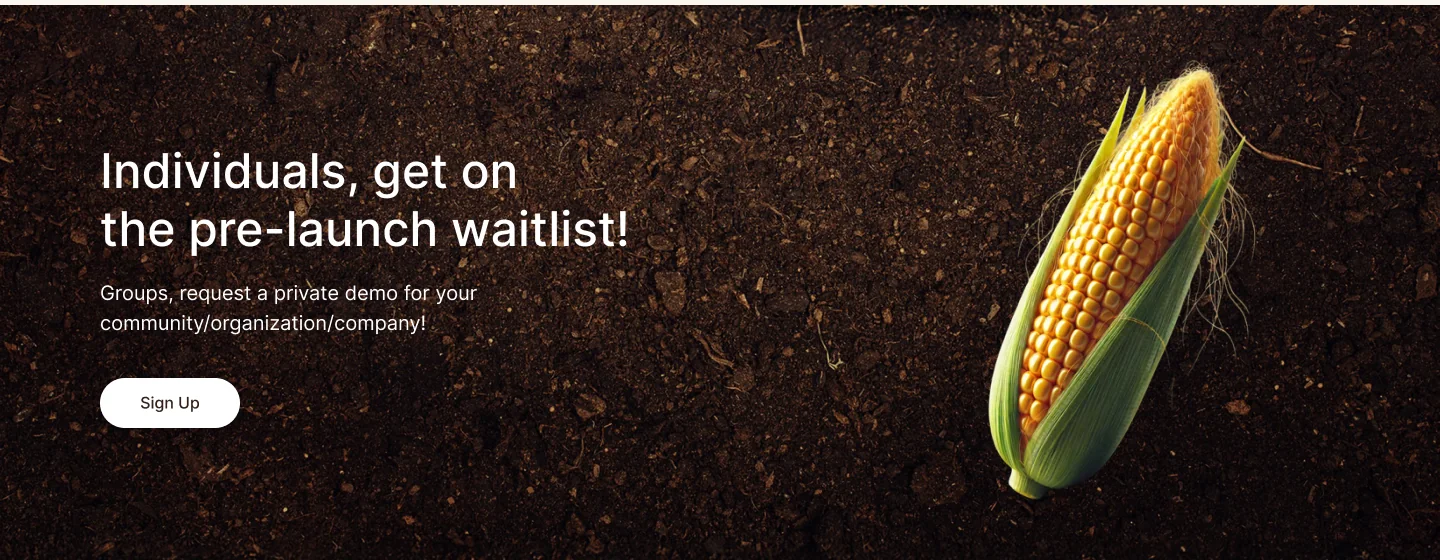
A tabbed section explains how the platform works step by step. A pre-launch waitlist invites individuals and groups to sign up. And profile cards show what members will be able to do, from measuring the resilience of cultivated soils to identifying the practices with the most positive impact.
Outcomes
The Ryzosphere now has one visual language that runs from its colours to its product.
The palette gives the brand meaning and gives the graph a legend. The website explains a complex idea in a few clear steps and invites people to join before launch. And the Network gives members a way to see, question and evaluate the relationships that a regenerative food system depends on.
5 + 2
Named brand colours and accents
4
Steps explaining the platform: Procedure, Matching, Valuing, Verifying
6
Relationship signals in the Network, from trust scores to conflicts of interest
3
Profile types: individual, business and organisation
Santorio
View case study |