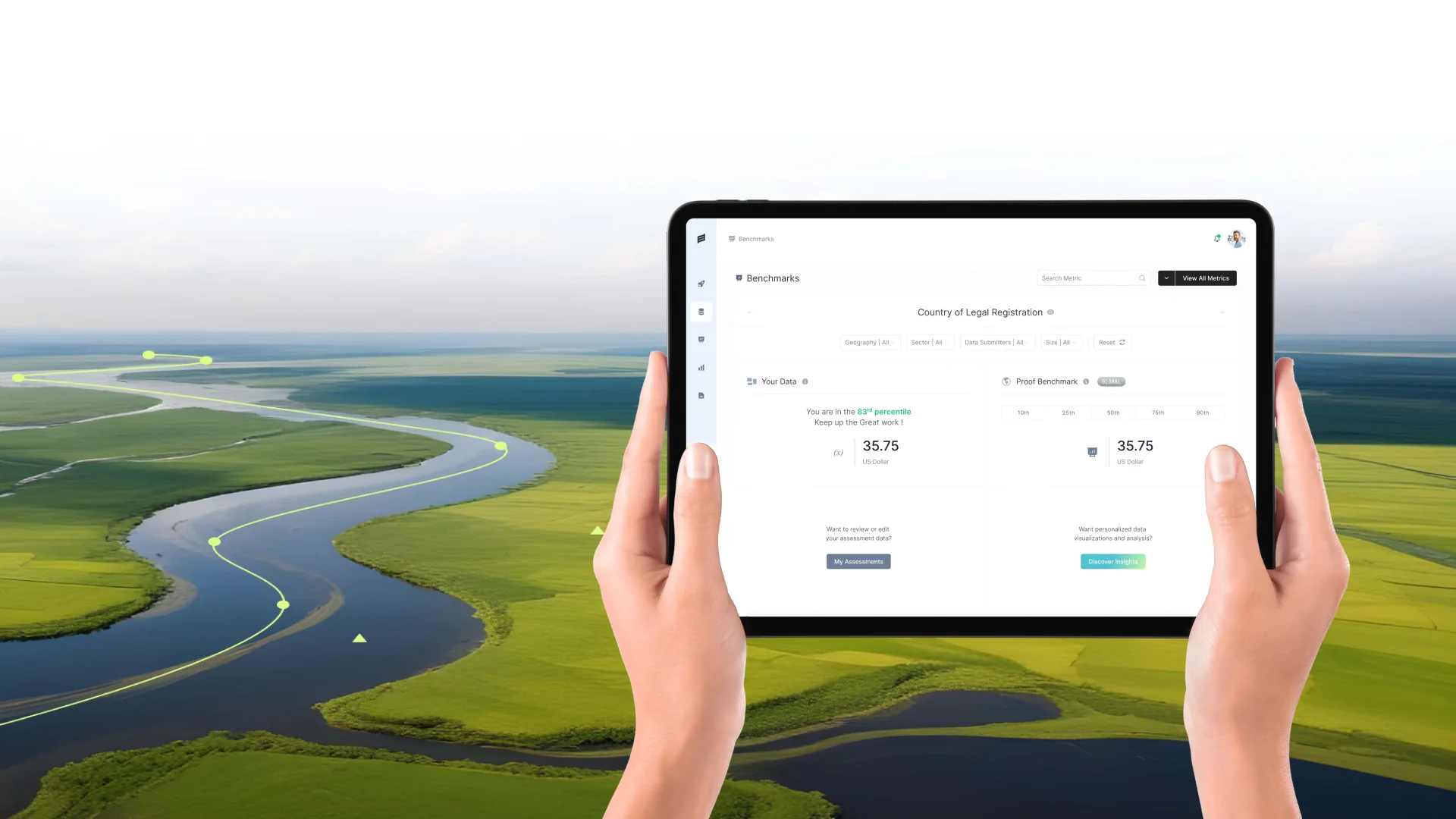
Design decisions affect sign-ups, support requests, sales conversations and how quickly teams can build. Yet many projects end without anyone measuring what changed. Without evidence, design becomes easy to cut when budgets tighten. Agreeing what to measure at the start of a project turns design from a cost into an investment with visible returns. Here is the approach we use with clients.
Start from the business goal
Every project should begin with a clear statement of what success looks like for the business. More qualified leads from the website. Fewer people abandoning onboarding. Fewer support tickets about a confusing feature. Faster delivery of new pages.
Measures follow from that goal. Without it, teams track whatever is easy to count, which rarely reflects real value.
Measure the starting point
Before changing anything, record where things stand. How many people complete the key task? How long does it take? How often do people contact support about it? How many questions does the sales team answer about a particular feature?
Without a baseline, improvement is only an impression. With one, even a modest project can show clear results.
Without a baseline, improvement is only an impression.
Choose a few measures
Pick two or three measures directly linked to the goal. More measures make the picture harder to read and easier to argue about.
Combine at least one number with one qualitative signal. Conversion rate tells you what changed; a handful of user interviews tells you why.
Give changes time
Some changes show results quickly, such as a clearer call to action. Others, such as a brand refresh or a design system, take months to show their full effect.
Agree in advance when results will be reviewed, so a project is not judged too early or forgotten too late.
Count the benefits inside the team
Some of the most valuable design work pays back internally. A design system can make new screens faster to design, build and review. Clear guidelines reduce rework and debate.
Track that time saved. It is often the strongest argument for continued investment in design foundations.
Examples of useful measures
For a website redesign: enquiry rate, quality of enquiries as judged by sales, and time spent on key pages. For onboarding: completion rate and time to complete. For a design system: time to design and build a new page, and the number of design questions during development.
For brand work: recognition in surveys, consistency across touchpoints and how confidently the team can produce new materials.
Pitfalls to avoid
Avoid vanity measures that look good but say little, such as total page views without context. Be careful about attributing every change to design when other factors, such as pricing or seasonality, also changed. Where possible, compare against a baseline period or a control group.
Agree before you start
- Define the business goal before choosing measures.
- Record a baseline before changing anything.
- Pick two or three measures, plus one qualitative signal.
- Track time saved inside the team as well.